

An n8n workflow factory under an agent harness
- n8n
- agents
- harness
Over time, building deterministic automations in n8n became my bottleneck: I could no longer spend several hours putting each workflow together by hand, chatting with Claude. So I built a complete writing and review system, a workflow factory under a harness: the structure around the models carries the intelligence, not the model itself.
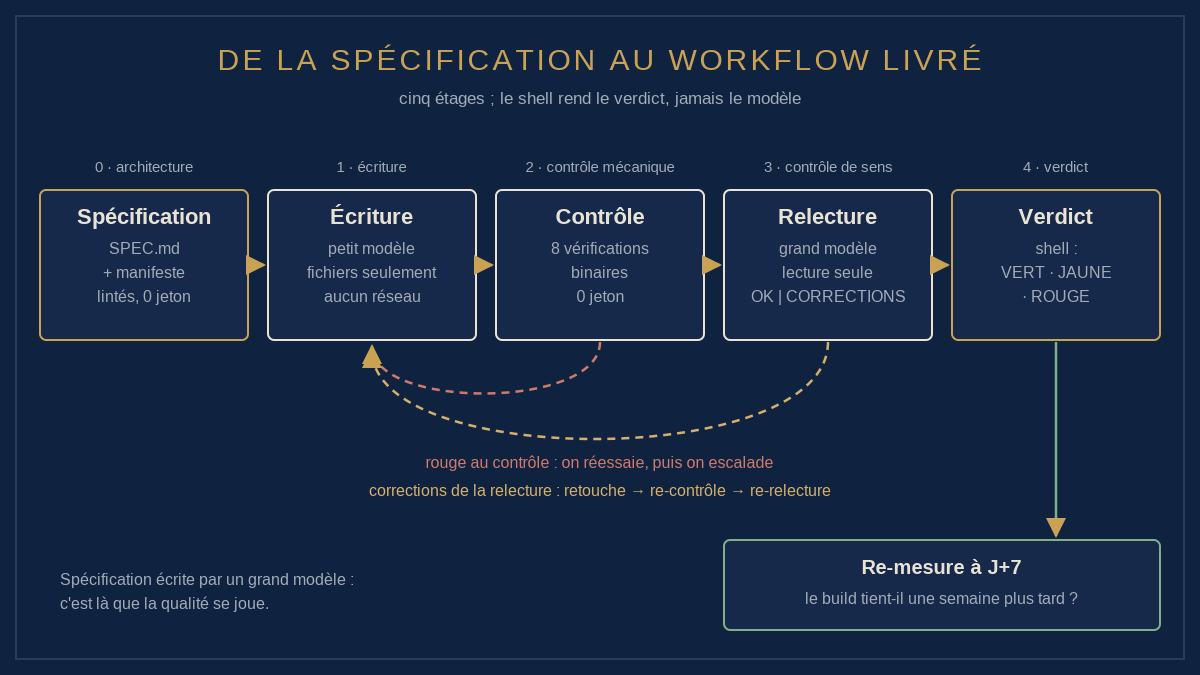
Two ways in. Either I describe the need myself: a workflow that performs a given function. Or a larger project, whose plan I have approved, needs a workflow: it orders it on its own, based on the specifications set during planning. Either way, the same pipeline takes over, without me holding the pen.
Specification first. A large model (Opus) writes the specification and a manifest, the list of what the workflow must contain. An automated check, with no model involved, verifies them before any writing begins. This is where quality is decided.
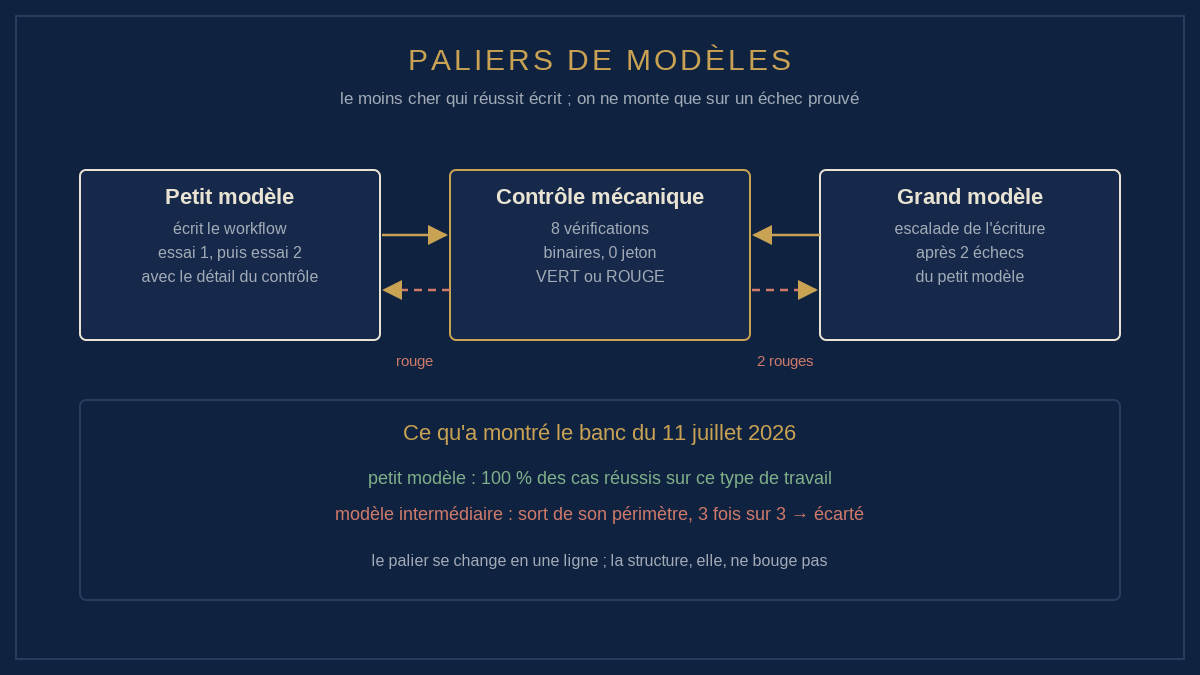
Model tiers, chosen through A/B testing. On July 11, 2026, I put three models through the same standardized tests. The small model (Haiku) passed every case for this type of work, at one-eighth the cost and nearly three times faster than the large model (Opus). The mid-sized model (Sonnet) went out of scope three times out of three. So the small model writes, and the large one (Opus) only takes over the writing if the small one fails the check twice.
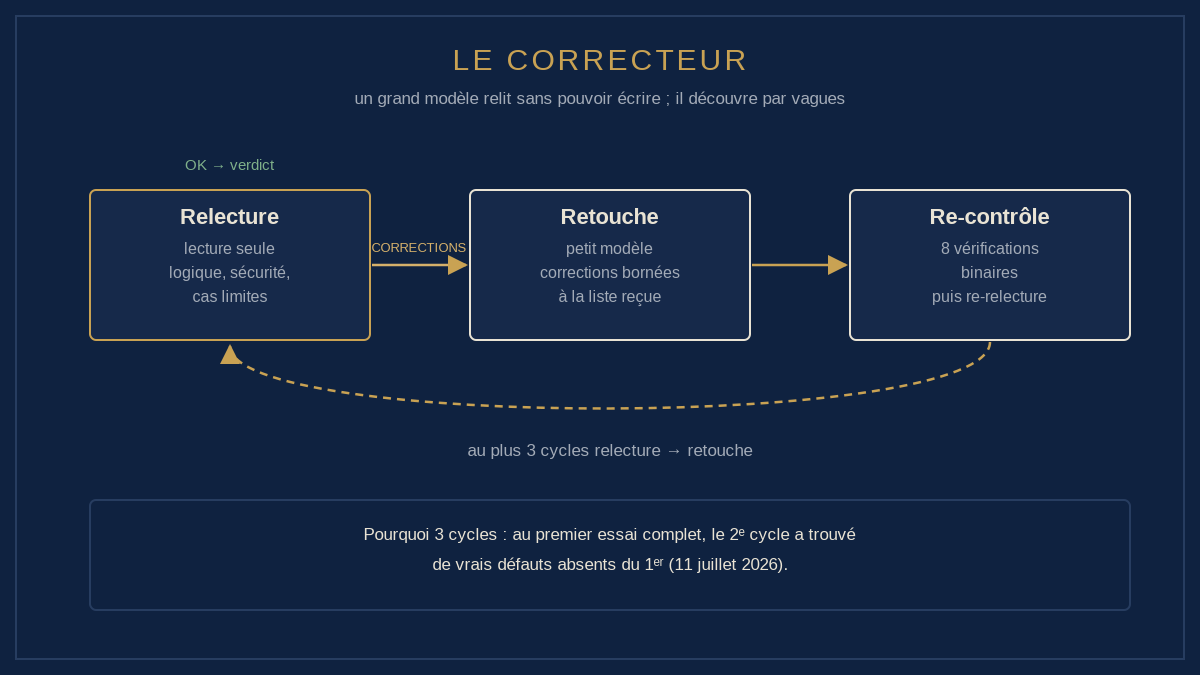
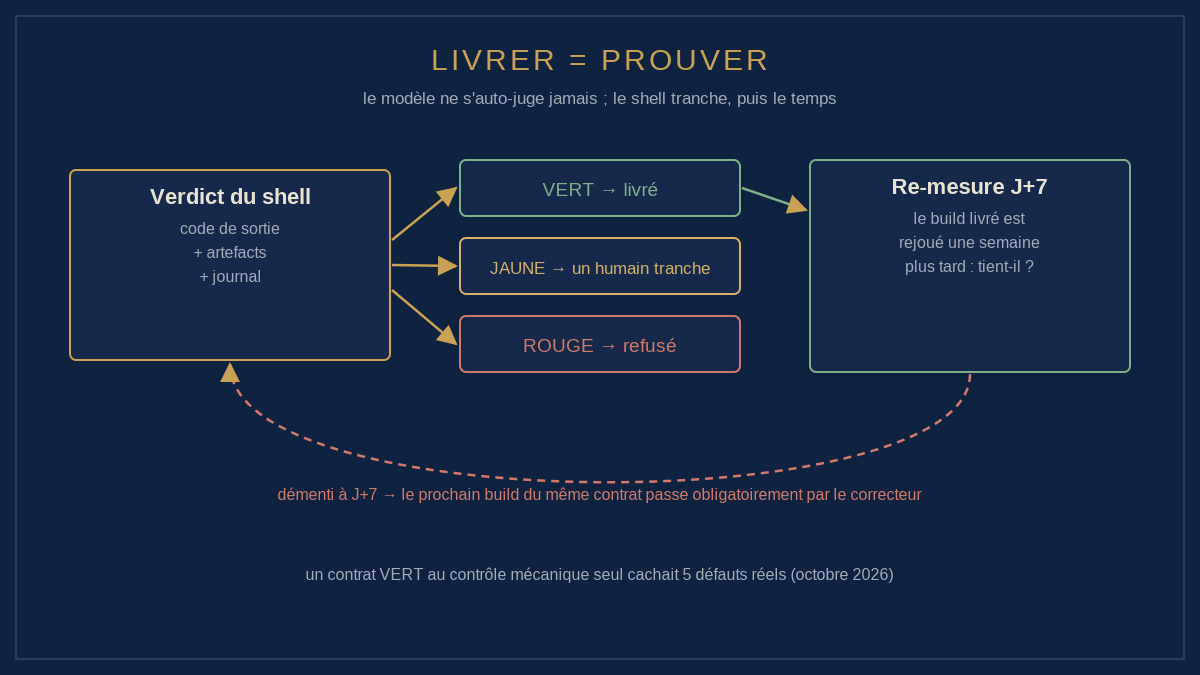
A reviewer. A model does not see its own mistakes well. Once the workflow is written, a large model (Opus) reviews it without being able to change it: it looks for logic errors, security flaws and edge cases, then returns a list of corrections. The small model (Haiku) applies that list, the check runs again, and the reviewer reviews again. This cycle repeats up to three times, because from the very first trial, the second review found real defects the first one had missed. In October 2026, one workflow had passed every automated check, but the review found five real problems in it. Review is not a luxury: it applies by default to every workflow headed to production.
Delivering through proof. It is not the model that decides whether the work succeeded: a verification gate, a script with no model, delivers the verdict. Green, it ships; yellow, I decide; red, it is rejected. The model never judges itself. Since July 20, 2026, every build is re-measured seven days later, and a refuted build forces the reviewer onto the next one. On September 8, 2026, I found that my repair pipeline lacked these safeguards: I added them.
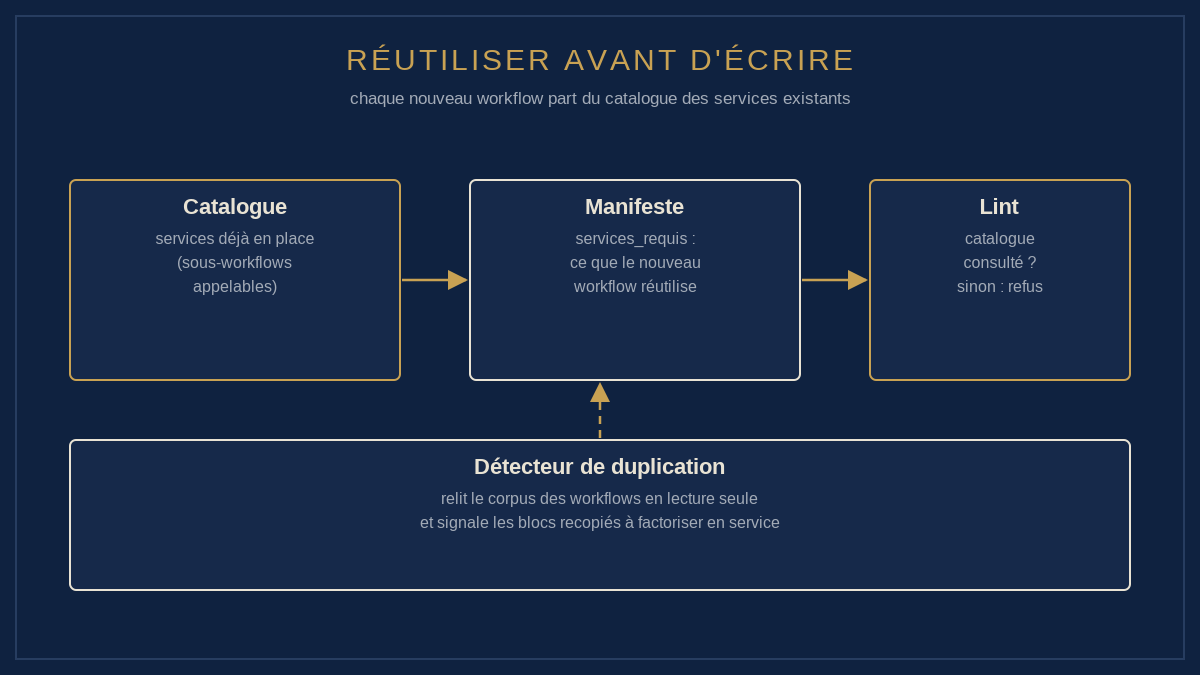
Reuse. Since July 10, 2026, every workflow declares the existing services it relies on, and a detector flags copied blocks.
What the factory has produced. In mid-July 2026, my n8n instance had about 250 active workflows. Today it has 380, not counting nearly 200 trials and old versions set aside. These workflows cover shift coordination, billing, email sorting and replies, recruiting, sales tracking, customer surveys, and the tools my agents call to read from or write to my systems.